
Infant School
Early Years Foundation Stage (EYFS)
At Henleaze Infant School, our Early Years Foundation Stage (EYFS) provides a nurturing, inspiring and play-rich environment where every child begins their learning journey with curiosity and confidence. Rooted in our school values, we support children to develop key early skills through purposeful exploration, high-quality interactions and a carefully designed curriculum. Our aim is for every child to feel happy, secure and ready to thrive as they take their first steps into school life.
Transition into school
Reception is the first year at Henleaze Infant School and the final year of the Early Years Foundation Stage (EYFS). Our experience has shown us that children benefit from a staggered induction when they start their Reception year. This enables children to develop confidence as they build up their time and experience in school and for staff to build a strong relationship with each child and their family. We begin with stay and play sessions in the summer term before children start school, then offer a home visit in early September to ensure all the information about your child is passed onto their key adults, followed by a planned transition timetable where children attend school in smaller groups, initially on a part-time basis. All children will be in school full time by the start of October. You can find more information on the ‘Starting our school’ page. It has more information such as being school ready and stories about starting school.

Early Years Foundation Stage framework
We follow the Early Years Foundation Stage (EYFS) framework, which sets the statutory duties that all early years providers must meet. This means we carefully plan learning experiences that support children’s development in all areas, ensure the environment is safe and nurturing and carry out regular observations to understand each child’s progress. We meet all safeguarding and welfare requirements by promoting children’s well-being, keeping accurate records and working closely with families. By adhering to the EYFS, we make sure that every child receives high-quality early education that helps them grow, learn and thrive.
Our curriculum
We have outlined the essential foundational knowledge for each area of learning. This is the granular detail about what pupils should know and be able to do as they progress through the phases of the EYFS. We recognise that every child is unique and will develop their skills at their own pace during the Reception year. Therefore, this knowledge will be revisited regularly, supported by practitioners’ professional judgement, high-quality interactions and carefully planned provision.
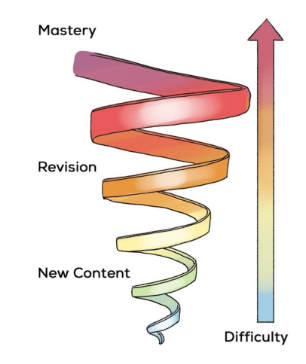
Key concepts and golden threads have been carefully planned in a spiral way to support progression and provide regular opportunities for retrieval and deepening understanding.
Golden threads
We have chosen seasons, celebrations, change, community, and relationships as golden threads to weave throughout the curriculum because they reflect key aspects of children's lives and the world around them. These themes provide meaningful, familiar contexts that help children make sense of new learning and build strong connections across subjects. They also support the development of empathy, a sense of belonging and an understanding of how we grow, interact and celebrate together within a diverse and ever-changing world.
Curriculum concepts
We have selected four key concepts that are woven throughout our curriculum. By revisiting these concepts regularly, children are able to connect new learning to what they already know. This ongoing reinforcement helps pupils build deeper understanding and retain knowledge more effectively. The key concepts are:
- Community - Henleaze Infant School places great importance on community, welcoming children from over 25 nurseries each year and valuing their diverse experiences. We promote belonging by celebrating each child’s uniqueness and fostering respect, empathy and shared identity. We ensure our curriculum reflects a wide range of cultures, traditions and backgrounds. Our curriculum is adapted each year to represent the cultures and festivals of the children in our cohort, helping all children feel included, valued and connected to the wider world.
- Location and Place - Understanding location and place helps children develop a sense of where they live, starting with the familiar surroundings of their school and local area, and gradually expanding to the wider world. This supports their geographical awareness and gives context to their growing sense of identity and connection with Bristol, the UK and beyond.
- Chronology - Chronology enables children to make sense of the past, understand change over time and see how their own lives are part of a bigger story. It supports historical understanding and helps them begin to grasp cause and effect, continuity and change, which are essential to becoming thoughtful, informed citizens.
- Growth - The concept of growth reflects our belief in the potential of every child to develop academically, socially and emotionally. It aligns with our focus on curiosity, resilience and high aspirations, supporting children as they grow into confident, capable learners and responsible global citizens. Growth helps children understand how humans, animals and plants develop and change over time. It supports their learning in science and encourages curiosity, care and responsibility for the living world, while also reflecting their own personal and academic development.
For a more in-depth look at how our concepts have been mapped throughout the academic year, please look at the downloadable concept map at the bottom of the page.
Characteristics of effective teaching and learning
The Characteristics of Effective Teaching and Learning describe how children learn, rather than just what they learn. While we recognise that all children develop at different rates, we focus on three key characteristics of effective teaching and learning every long term.
